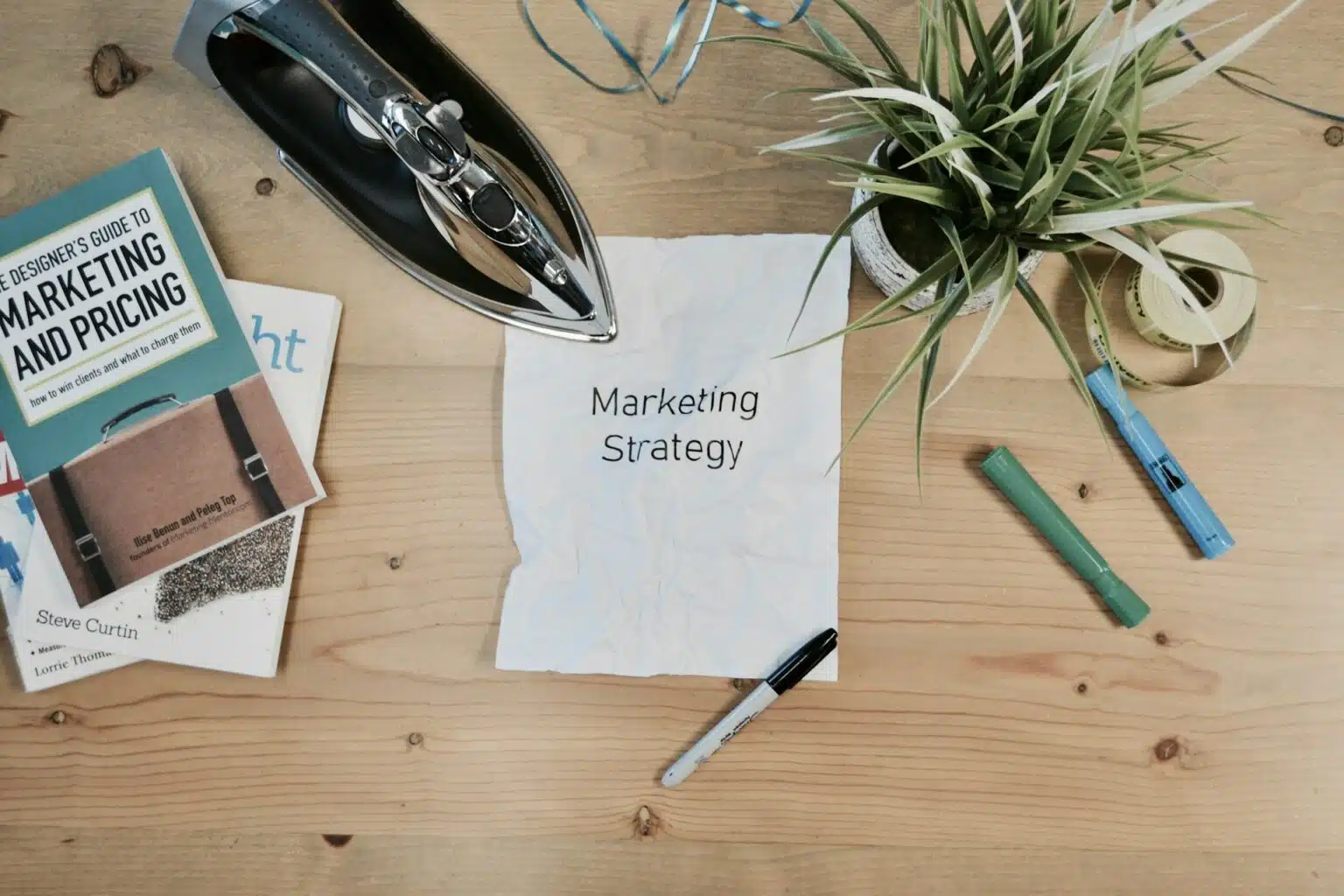

You are wondering which marketing experiments that work are worth your limited time and budget? In a landscape where attention spans are shrinking, ad costs keep rising, and AI is reshaping how customers find products, knowing where to focus your testing efforts is more important than ever.

If you’re running a startup, a small business, or even just managing a side project, you’ve probably heard the phrase “test everything” more times than you can count. But what does that actually mean in practice? This article walks through twelve growth marketing experiments that have shown consistent results across industries in 2026.
These aren’t theoretical concepts pulled from textbooks, they’re practical tests you can run with relatively small resources, measure clearly, and scale up if they work. Whether you’re a solo founder or part of a small marketing team, you’ll find something here you can put into action this week.
Why Marketing Experiments Matter More Than Ever
Marketing today is fundamentally different from what it was even five years ago. Cookie-based tracking is largely dead, AI assistants are starting to mediate purchase decisions, and customers are more skeptical of polished brand messaging than they’ve ever been. What worked in 2020, and those are heavily-funded paid acquisition, aggressive remarketing and generic email blasts, is rapidly losing effectiveness.
In this environment, the businesses that win are those that test, learn, and adapt faster than their competitors. Running structured experiments isn’t just a nice-to-have anymore; it’s how you avoid burning your budget on tactics that no longer deliver. Data-driven marketing strategies have moved from buzzword to baseline expectation.
The good news is that experimentation has also gotten easier and cheaper. AI tools let you generate variants quickly, no-code platforms let you spin up landing pages in hours, and analytics tools provide statistically meaningful insights faster than ever. The barrier to running real experiments has dropped, and what’s left is figuring out which ones actually move the needle.
What Makes a Good Marketing Experiment?
Before we get into specific tests, it’s worth understanding what separates a good experiment from a wasted one. A good experiment has four characteristics.
First, it has a clear hypothesis. You should be able to write it as: “I believe that doing X will result in Y, because of Z.” Without a hypothesis, you’re not experimenting — you’re just trying random things.
Second, it has measurable outcomes. You need to know what success looks like before you start, not after the data comes in.
Third, it’s structured to isolate variables. If you change three things at once and conversions go up, you don’t actually know what worked. Finally, it has a defined timeframe. Experiments that drag on indefinitely either get forgotten or contaminated by other changes happening in your business.
With those principles in mind, here are twelve experiments that consistently deliver actionable insights for startups and growing businesses in 2026.
Marketing Experiments That Work in 2026
1. The 24-Hour Landing Page Test
Build a simple landing page describing a product or feature you haven’t built yet. Include a clear call-to-action, which is typically an email signup or pre-order button. Drive a small amount of traffic to it (paid social, friends, niche communities) and measure how many people convert.
This is one of the oldest tricks in the book, but it remains one of the best marketing experiments for growth because it answers the most important question: does anyone actually want this? Spending a weekend on a landing page is dramatically cheaper than spending six months building a product nobody wants.
The key here is honesty. The page needs to look real. If conversion rates exceed 5-10%, you’ve validated demand. Below 1-2%, reconsider your offer or audience.
2. Pricing Page Variants
Many businesses underprice. Run an A/B test with two pricing structures where one is your current price, and one is notably higher (50-100% more). Measure not just conversion rate but total revenue per visitor.
You’ll often find that higher pricing produces similar or better revenue, with the bonus of attracting customers who value the product more (and churn less). The fear of higher pricing usually exists more in the founder’s head than in the market.
Run this for at least 2-4 weeks to gather statistical significance. If your traffic is too low for an A/B test, run sequential pricing. Try two weeks at price A, two weeks at price B.
3. Cold Outreach With Hyper-Personalization
Cold email is often dismissed as dead, but that’s because most cold email is spam. The experiment: send 50 highly personalized emails to ideal customers. Each email references something specific about the recipient, like a recent post, a company milestone, a shared connection. Compare response rates to your standard outreach.
In 2026, with AI tools generating thousands of generic outreach messages, truly personalized outreach stands out more than ever. The cost per email is higher, but conversion rates can be 10-20x higher. Done right, this experiment shows that quality dramatically beats quantity in modern outreach.
4. Content Format Switching
If you’ve been writing 1,500-word blog posts and seeing flat results, run an experiment with different content formats over four weeks.
Try:
- A single deep-dive post (3,000+ words) with original research
- Short-form video content (60-90 seconds)
- A LinkedIn carousel or thread
- An interactive tool or calculator
Track engagement, traffic, and conversions for each. You’ll often discover that one format dramatically outperforms others for your audience. Many B2B startups have found that interactive tools (free calculators, ROI estimators) outperform written content by orders of magnitude in 2026.
5. Reactivation Email Sequences
Most businesses ignore inactive customers, meaning people who bought once and never returned, or signed up for the newsletter but stopped opening. Design a 4-email reactivation sequence and send it to customers who haven’t engaged in 90+ days.
The economics here are excellent. These contacts already cost you money to acquire, and reactivation costs nearly nothing. Even a 5-10% reactivation rate can dramatically improve your unit economics. Test different angles: a special offer, a “we missed you” message, a content update, a survey asking what went wrong.
6. Referral Program Variations
Referral programs work, but only if structured correctly. Run an experiment testing three referral incentive structures over six weeks:
- Cash rewards (e.g., $10 credit for referrer and referred)
- Status/access rewards (early access, exclusive features, badges)
- Charitable giving (we’ll donate $10 to charity for each referral)
Measure not just referrals generated, but referral quality (do referred customers convert and retain at the same rate?). Different audiences respond dramatically differently. Younger, mission-driven audiences often respond better to charitable rewards than to cash.
7. The “Stupid Simple” Email Subject Test
Email open rates have been declining as inboxes get more crowded. Run a two-week experiment alternating between two subject line styles:
- Style A: Polished, professional (your usual)
- Style B: Plain, almost casual (“quick question,” “thoughts on this?”)
You’ll likely find that Style B beats Style A by 30-50% in open rates. Email is increasingly competing not with other marketing emails but with personal email, and personal emails don’t sound like they’re from a brand. Once you have the open, you still need quality content, but the door has to open first.
8. Customer Onboarding Friction Test
Most onboarding flows are too long. Pick your current onboarding sequence and create a stripped-down version with 50% fewer steps. A/B test new signups between the two.
Counter-intuitively, removing steps often improves activation rates more than any “improvement” you could add. Each form field, each tutorial screen, each email is a chance to lose the user. Aggressive simplification is one of the marketing experiments for startups that consistently surprises founders with its impact.
9. Localized Landing Pages
If you serve customers in multiple regions or languages, create localized versions of key landing pages. Don’t just translate but adapt the messaging, examples, currency, and references to each market. Run a controlled test where 50% of traffic from a specific region sees the localized version and 50% sees the original.

Localization gains are typically 20-40% in conversion rate. The cost of localization has dropped dramatically with modern AI tools, but most companies still use English-only pages globally. The opportunity remains substantial in 2026.
10. Different “Hero” Sections
The hero section of your homepage is the single highest-leverage piece of marketing content you have. Run a four-way A/B test with completely different hero messaging:
- Benefit-focused (“Save 10 hours per week”)
- Outcome-focused (“Land your dream client”)
- Identity-focused (“For founders who actually ship”)
- Problem-focused (“Tired of email chaos?”)
Often one will outperform the others by 50-100% in conversion rate. The angle that works varies enormously by audience and category — there’s no way to know without testing. Many companies have been running the same hero for years without ever testing alternatives. Don’t be one of them.
11. The “Calls Instead of Emails” Test
In B2B, especially for higher-priced offerings, calls dramatically outperform emails. The experiment: take your top 20 leads from the past month who didn’t convert. Try to call all 20 personally. Compare conversion rate to your usual email follow-up.
In 2026, when most outreach is automated, a real phone call has become a rare and effective tool. People remember speaking with a founder. They don’t remember automated emails. The downside is obvious because calls don’t scale. But for high-value deals, the math often works dramatically in favor of calling.
12. Run a Mini-Documentary or Behind-the-Scenes Series
Brand content has shifted dramatically toward authentic, behind-the-scenes formats. The experiment: create a 5-part video or audio series documenting something real about your business , like a customer’s journey, your team building a feature, your founder’s daily challenges.
Track audience growth, engagement, and qualified leads attributed to the series. Many companies report that authentic, narrative-driven content produces leads at 5-10x the efficiency of traditional ad-based content. The bar for production quality is also lower than ever because viewers actually prefer “real” over polished in 2026.
How to Choose Which Experiment to Run First
Twelve experiments is a lot, and trying all of them simultaneously is a recipe for confusion. Here’s how to prioritize based on where your business currently is:
If you’re pre-product-market-fit, focus on experiments 1, 4, and 10. You need to figure out what people actually want and what messaging resonates. If you’re post-product-market-fit but struggling with growth, focus on experiments 2, 5, 6, and 8. You’re optimizing the funnel and improving unit economics. If you’re scaling and need to find new channels, focus on experiments 3, 9, 11, and 12. You’re looking for breakouts.
For each experiment, write down:
- The hypothesis (specifically what you expect to change)
- The metric you’ll measure
- The minimum sample size or duration required
- What “success” looks like (so you know whether to scale up)
How to Run Marketing Experiments Without Going Crazy
Running experiments requires discipline. Without it, you’ll change ten things at once, get confused about what worked, and end up worse off than when you started.
Some practical tips on how to run marketing experiments effectively:
Document everything.
Keep a simple log of what you tested, when, what changed, and what the result was. Six months from now, this becomes invaluable. You can do it in a digital manner too.
Don’t change other variables during a test.
If you’re testing a new pricing page, don’t simultaneously launch a big PR campaign or change your homepage.
Give experiments enough time.
Most need 2-4 weeks to produce statistically meaningful results. Looking at three days of data and declaring victory (or defeat) is one of the most common mistakes founders make.
Be willing to kill experiments that aren’t working.
The point of testing is to learn quickly, not to “make this work no matter what.”
What to Do With Results
The point of marketing testing ideas isn’t just to feel scientific. It’s to make decisions. When an experiment wins, scale it up, but slowly. What works at small scale sometimes breaks at scale. Roll out winners gradually and keep watching the numbers.

When experiments lose, learn from them. Why didn’t it work? Was the hypothesis wrong, or the execution flawed? Often you’ll find that a “failed” experiment was actually testing the wrong thing.
Sometimes the most valuable insight is realizing that your original assumption was incorrect.
Build a culture of experimentation in your team. Make it normal to test things. Celebrate insightful losses, not just wins. The companies that out-experiment their competitors over years end up dominating their categories — even when they started with similar resources.
Common Mistakes to Avoid
Even smart founders make repeated mistakes when running marketing experiments.
The most common ones to watch out for:
- Testing too many things at once and being unable to attribute results
- Not waiting for statistical significance and acting on noisy data
- Ignoring qualitative feedback in favor of pure metrics (talk to people, not just spreadsheets)
- Testing only minor variations (button colors, font tweaks) when major changes (offer, audience, channel) would yield bigger learnings
- Forgetting to document and revisit past experiments
Avoiding these mistakes is half the battle. The other half is just having the discipline to run experiments week after week, even when other things demand your attention.
The Compounding Power of Testing
The companies that grow consistently aren’t the ones who get one big tactic right — they’re the ones who run dozens of small experiments, keep what works, kill what doesn’t, and compound learnings over time. Marketing experiments that work are rarely glamorous. Most are small adjustments that add up over months and years.
If you commit to running just one experiment per month from this list, by the end of the year you’ll have a much clearer picture of what works for your specific business. You’ll have data instead of guesses, customers instead of hopes, and confidence instead of anxiety. That’s worth more than any clever campaign or viral hit. Start small, test honestly, and let the results guide your next move.