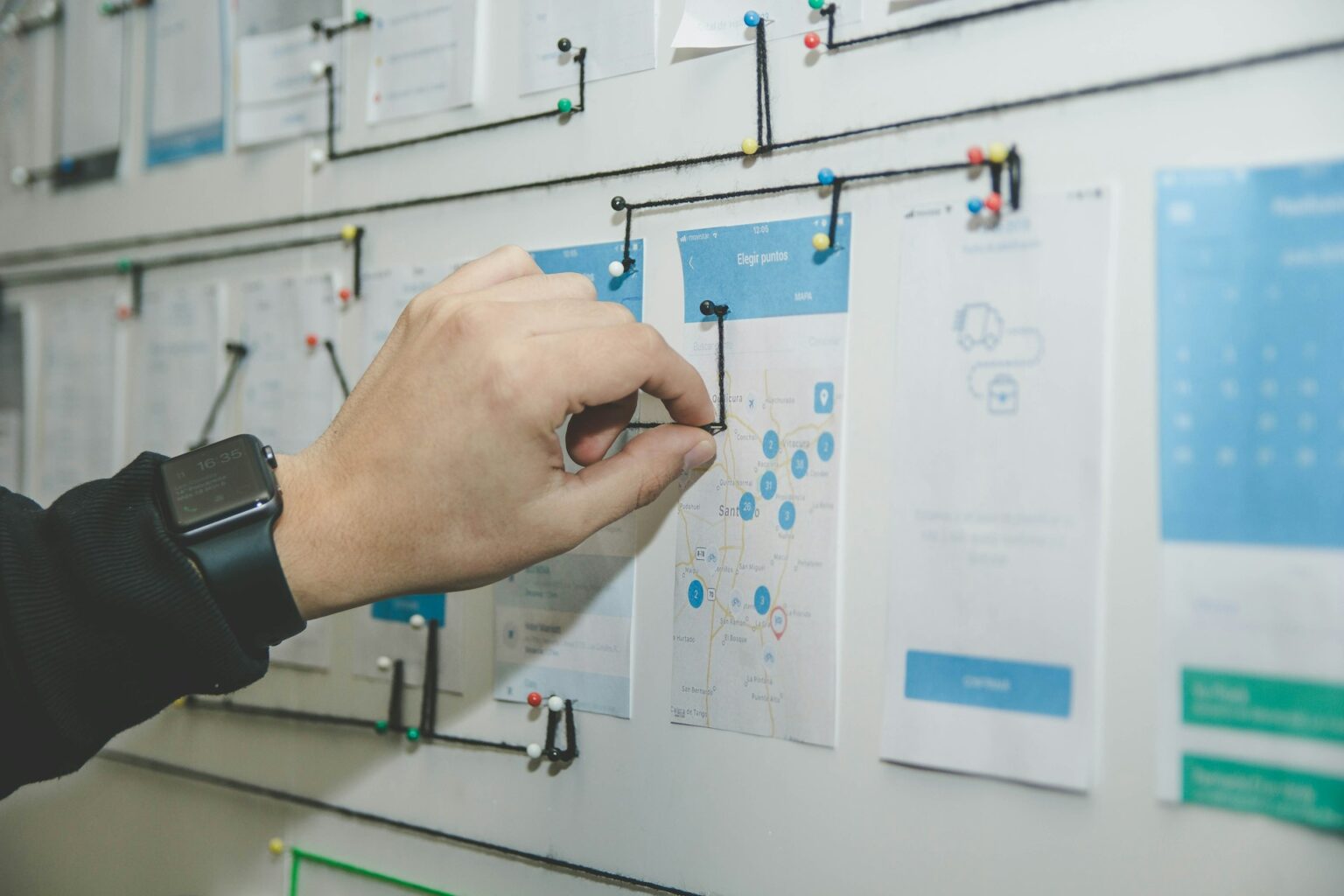

Async team workflows are the backbone of modern remote work, allowing people to make progress without being “always on” at the same time. When async team workflows are done well, your team can move faster, reduce burnout and still stay tightly aligned.
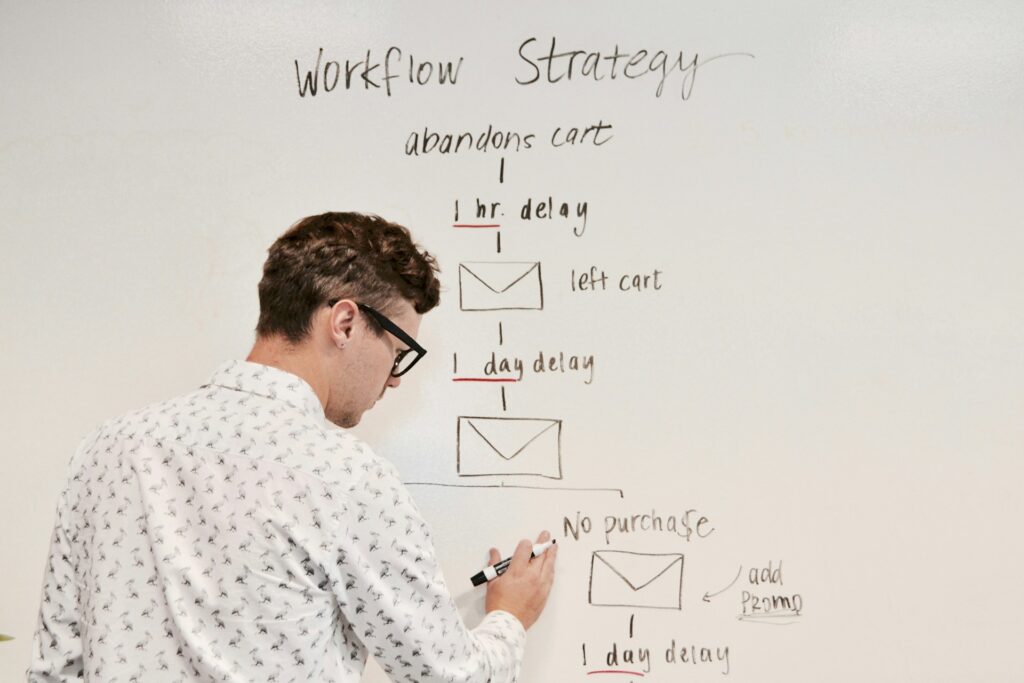
Instead of relying on real-time calls and constant pings, asynchronous team workflows create clear, documented, repeatable ways of working that do not depend on everyone being online together.
10 Asynchronous Team Workflows Elements
For global teams spread across time zones, this is not just a productivity hack; it is a survival strategy. The following ten workflows show how to implement async team workflows in a way that feels human, sustainable and effective.
1. Async goal-setting and weekly planning
Most teams still set goals synchronously: a big meeting, a long call, lots of talking, little documentation. An async workflow flips this: the thinking and writing happen first, the discussion later if needed.
A simple version looks like this:
- At the start of the week, the leader shares a written outline of priorities, constraints and context for the team.
- Each team member responds in writing with their top 3–5 priorities for the week, linked to the overall goals.
- Clarification and alignment happen in comments, not calls, unless there is a real disagreement that needs live discussion.
This is one of the most powerful async team workflows because it creates a written contract for the week. Everyone sees what everyone else is working on; nobody has to wait for a status meeting to understand direction.
It also gives quieter or more reflective people time to think before committing. Instead of who speaks loudest in a meeting, the focus shifts to who writes clearly and proposes realistic, measurable plans.
2. Async project briefs and approvals
In many teams, project kickoffs still mean a crowded call where half the people are passive listeners. An async workflow replaces this with a written brief that travels through a clear approval path.
Here is how this async workflow for remote teams might work:
- The project owner writes a structured brief: goals, scope, audience, risks, success metrics, timeline, stakeholders.
- Stakeholders review the brief on their own time and leave comments, questions and suggested edits.
- The project owner consolidates feedback, updates the brief and tags decision-makers for final approval.
Only if there is fundamental misalignment does the team schedule a short call. The default is: write first, comment second, meet last.
This kind of asynchronous team workflow has several benefits:
- Everyone can contribute, even across distant time zones.
- There is a single source of truth that new teammates can read later.
- Decisions are anchored in writing, which reduces confusion when memories fade.
Over time, teams can templatize these briefs, turning them into a repeatable pattern for every new project.
3. Async daily updates instead of status meetings
Daily stand-up meetings were designed for co-located teams; in distributed environments they often become a drain. Async daily updates are a lighter, more flexible alternative.
A typical workflow:
- Each person posts a short daily update in a dedicated channel or document, answering three questions:
- What did I complete yesterday?
- What am I focusing on today?
- Where am I blocked or need support?
- Teammates and managers read updates in their own time, react or comment where needed and offer help on blocks.
This is one of the simplest examples of async team workflows, yet it can eliminate a surprising number of recurring calls.
The advantages are clear:
- No one has to join a meeting at 7 a.m. or 10 p.m. just to say “working on the same thing as yesterday.”
- Written updates create a historical log of progress that can be referenced later.
- People can write more nuanced updates than they might share verbally in a rushed call.
When teams commit to reading and responding to these updates, they also build a strong sense of mutual visibility and accountability—without adding meetings to the calendar.
4. Async decision-making with clear owners
Many teams confuse discussion with decision. People talk endlessly in chat or calls, yet nobody is sure who is allowed to make the final call. Async workflows can clean this up by pairing written proposals with explicit decision ownership.
A structured async team workflow for decisions could look like this:
- One person (the “driver”) writes a short proposal summarizing the decision to be made, the options considered and their recommended choice.
- The proposal is shared in a dedicated space with a fixed time window for feedback (for example, 48–72 hours).
- Stakeholders add comments, concerns and alternative suggestions.
- At the end of the window, the designated decision-maker publishes the decision and next steps in writing.
This approach allows global teams to share input without requiring everyone in one place at one time. It also avoids the trap of “decision by endless thread,” because there is a clear end point where someone must choose.
Over time, this decision-making flow becomes one of the best tools for async team workflows—a cultural habit that keeps things moving forward while still respecting diverse perspectives.
5. Async documentation and knowledge sharing
Async work lives and dies by documentation. If information exists only in someone’s head or in a call recording nobody will watch, the team eventually stalls. That is why a documentation-first mindset sits at the heart of most effective asynchronous team workflows.
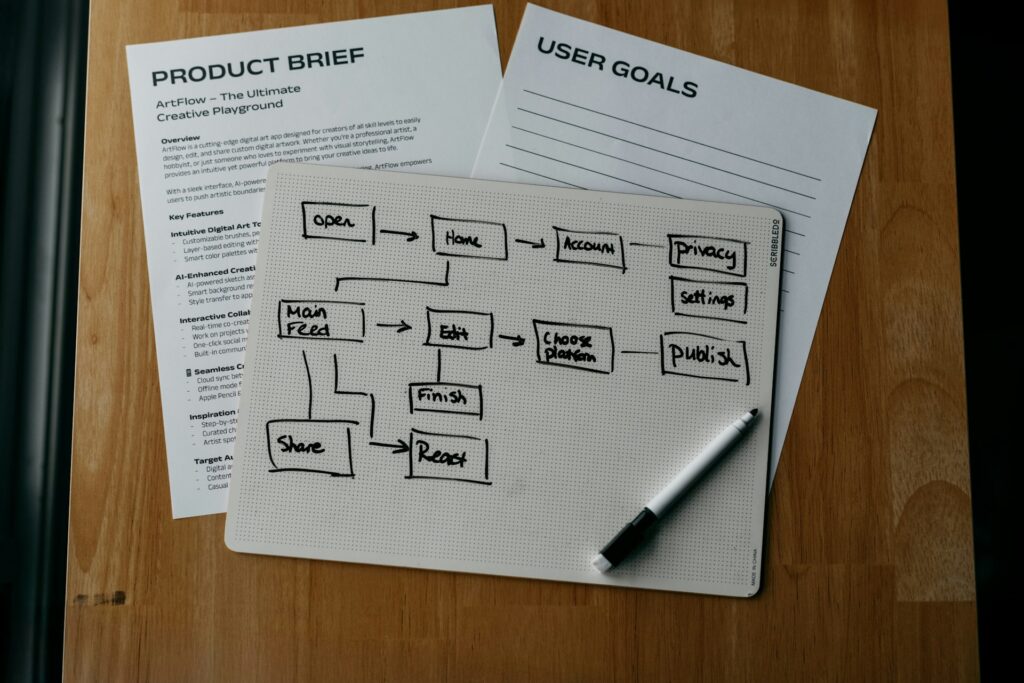
A practical documentation workflow includes:
- A central knowledge base (wiki, shared docs space) with clear structure: projects, processes, policies, FAQs.
- A norm that every important decision, experiment and lesson learned gets captured in writing.
- Lightweight templates for recurring documents: post-mortems, process docs, onboarding guides.
When someone asks a question, the first response is often a link to existing documentation, and if it does not exist, the answer gets turned into a new article.
This creates a compounding effect: each week, the team’s written knowledge becomes richer, making it easier for new people to ramp up and for existing members to move autonomously. For async workflows for remote teams, this kind of documented memory is as crucial as any tool.
6. Async feedback and review cycles
Designers, writers, engineers, marketers—anyone who produces work—needs feedback. In synchronous cultures, this often means long review meetings and screen shares. In async cultures, feedback is built around reviewable artifacts and structured written comments.
A typical async workflow for remote teams handling feedback might be:
- The creator shares their work-in-progress in a shared space, along with context: goal, audience, constraints, specific questions.
- Reviewers comment directly on the artifact (document, design, code) within an agreed timeframe.
- The creator consolidates feedback, responds to comments and decides what to incorporate.
- If something remains unclear or sensitive, only then is a short call scheduled.
This approach has several benefits:
- Creators get more thoughtful feedback, because people can review on their own time.
- Reviewers avoid being pulled into every single review meeting.
- There is a traceable history of feedback, useful for future iterations or onboarding new team members.
This is one of the most valuable examples of async team workflows, especially for teams producing complex, knowledge-based work.
7. Async onboarding for new team members
Onboarding is often treated as a series of meetings: intros, explanations, shadowing. For distributed teams, this is exhausting for both newcomers and existing staff. An async onboarding flow can dramatically improve the experience.
A structured async team workflow for onboarding might include:
- A self-paced onboarding hub with: company story, values, tools, processes, org chart, key documents.
- A checklist of tasks for the first week, first month and first quarter, with clear owners for each item.
- Pre-recorded videos or written guides for commonly repeated explanations, like how to use core tools or how projects are structured.
- Async introductions: new hires share a short written or recorded intro; teammates respond in a dedicated channel.
Live calls still have a place—especially for building relationships—but they become the complement, not the foundation. This frees senior people from repeating the same information and helps new hires feel less overwhelmed, because they can learn at their own pace.
Onboarding is a prime area where teams see the real power of how to implement async team workflows: once you build it well, it supports every future hire.
8. Async incident response and post-mortems
When something goes wrong—an outage, a big mistake—the instinct is often to drag everyone into an emergency call. Sometimes that is necessary, but once the immediate crisis is contained, an async workflow can handle the analysis and learning.
An effective incident flow might look like this:
- Create a single incident document capturing: what happened, impact, timeline, immediate actions taken.
- Invite people involved to add their perspective asynchronously: logs, screenshots, decisions, questions.
- A designated owner organizes this into a coherent narrative and identifies possible root causes and contributing factors.
- The team comments on the proposed root causes and suggested preventive measures.
- Final action items are assigned with owners and deadlines, all tracked in a shared system.
This workflow ensures that learning from incidents does not depend on one intense meeting. People across time zones can contribute once their workday starts, and the final document becomes a reusable reference.

In the larger ecosystem of async team workflows, this makes the organization more resilient: each incident leaves behind a clearer map of what to avoid and how to respond better next time.
9. Async performance check-ins and growth conversations
Performance and growth are often treated as deeply synchronous topics, but they do not have to be only live conversations. A combined async + synchronous approach can make them more thoughtful and less stressful.
A hybrid asynchronous team workflow for performance might be:
- Before a formal review or check-in, both manager and team member answer structured questions in writing: achievements, challenges, learnings, goals, support needed.
- They share these reflections in advance, giving each other time to process, add comments and gather examples.
- A shorter live conversation then focuses on clarification, alignment and next steps, rather than trying to remember everything on the spot.
This workflow is especially useful for async workflows for remote teams where manager and direct report may rarely overlap in real time. It respects both schedules while still preserving the human element of live dialogue.
Over time, these written reflections become a timeline of growth, giving both sides a richer view than occasional hurried conversations ever could.
10. Async retrospectives and continuous improvement
Teams that work asynchronously need a regular rhythm of reflection to avoid drifting into chaos. Retrospectives—looking back at a sprint, a project or a quarter—are a perfect candidate for async workflows.
An async retrospective might work like this:
- The facilitator opens a retrospective document or board with a few guiding prompts:
- What went well?
- What did not go well?
- What should we start, stop and continue?
- Team members add their thoughts over a set time window, often anonymously if the tool allows it, to encourage honesty.
- The facilitator clusters themes, highlights patterns and proposes 2–3 concrete experiments or changes for the next cycle.
- These proposed changes are shared back, and the team reacts asynchronously; only if there is disagreement is a short call needed.
This kind of async team workflow keeps improvement continuous without demanding everyone show up at the same time. It also tends to produce more thoughtful input, because people are not put on the spot.
When teams regularly run async retros, they naturally refine their best tools for async team workflows, their documentation and their habits. The workflow becomes self-correcting.
How to implement async team workflows sustainably
Knowing examples of async team workflows is helpful, but implementing them is where many teams stumble. A few principles can make the transition smoother:
- Start small, with one or two workflows, not ten.
- Choose an area where meetings are obviously painful—status updates, project kickoffs, reviews.
- Co-design the new workflow with the team: what information is needed, who owns which part, what timelines make sense.
- Make expectations explicit: when people are expected to reply, where decisions are recorded, which channels are for what.
- Review and refine after a few weeks, using an async retrospective.
Most importantly, align your tools with your behavior. It is not enough to adopt a new platform; the team must agree to use it in a consistent, predictable way. The true power of async team workflows lies not in the software, but in the habits people build around it.
When done well, asynchronous team workflows give distributed teams something rare: the ability to move quickly without burning people out in back-to-back calls. Work becomes quieter, deeper and more deliberate—yet the organization moves faster, not slower, because it is no longer constrained by time zones and calendars.